


Refractory and/or resistant herpes simplex virus (HSV) infections in immunocompromised adult patients remain a challenge1-4


When are HSV infections considered refractory?
Refractory HSV infection should be considered when a patient fails to show clinical improvement despite appropriate antiviral therapy, typically with nucleoside analogues.3,5
Although genotypic and phenotypic testing can determine HSV resistance to nucleoside analogues, such as acyclovir, these tests present challenges.3,6,7

Due to limited availability and potentially extensive turnaround times for results, laboratory testing should not delay adjustments in clinical management3,4,6,7
Although rare in immunocompetent hosts (<1%), acyclovir-resistant (ACV-R) HSV has been reported in up to 16% of immunocompromised patients2,8,9
Impacted patient populations may include, but are not limited to:
- Hematopoietic cell transplant (HCT) recipients9
- Patients with blood cancers10
- Solid organ transplant (SOT) recipients2
- Patients with HIV2
- Patients with autoimmune diseases requiring certain types of immunosuppressive therapies8,11
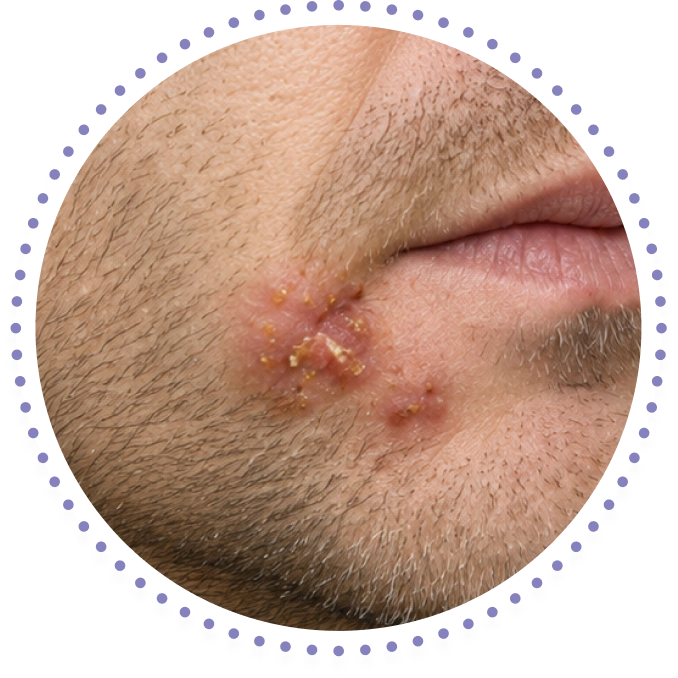
In immunocompromised patients, HSV can cause more severe and persistent disease3,4,8 with lesions that may:
- Appear as large, deep, and necrotic ulcerations4,8,14
- Have atypical features4,8
- Recur frequently and last longer, often becoming chronic4,8
What are the potential risks associated with refractory and/or resistant HSV infections?


- Longer and more severe manifestations of HSV3
- Prolonged hospitalization (primarily associated with antiviral treatment administration and monitoring)15,16
- Extended courses of antiviral therapy15
- The potential need to adjust immunosuppressive treatment for underlying conditions due to active HSV infections3,17,18
Which of your immunocompromised adult patients may be at risk for refractory HSV infection?
Do you see immunocompromised patients such as these in your practice?
Select a patient profile below to explore.
Patient profiles are for illustrative purposes only and do not depict actual patients.
Mike
Aged 47 years | Male
Patient status:
Mike experienced a breakthrough mucocutaneous HSV-1 recurrence 35 days after undergoing an HCT.
Elliot
Aged 52 years | Male
Patient status:
Elliot experienced a breakthrough mucocutaneous HSV-2 recurrence 10 days after starting his first cycle of R-CHOP for diffuse large B-cell lymphoma (DLBCL).
Annie
Aged 30 years | Female
Patient status:
Annie received a bilateral lung transplant for cystic fibrosis 25 days prior to a breakthrough mucocutaneous HSV-1 recurrence.
Erica
Aged 42 years | Female
Patient status:
Erica was diagnosed with HIV and started antiretroviral therapy (ART) 2 months prior to experiencing a recurrent mucocutaneous HSV infection.

This case is fictional. Description and images not based on an actual patient.
Mike
Patient summary
- Underwent an allogeneic HCT for myelodysplastic syndrome and initiated standard prophylaxis for graft-versus-host disease (GVHD) and infectious diseases19,20
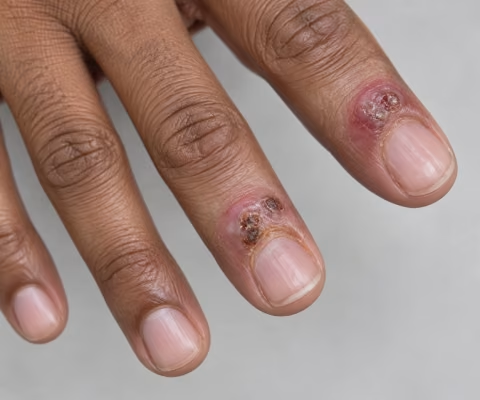
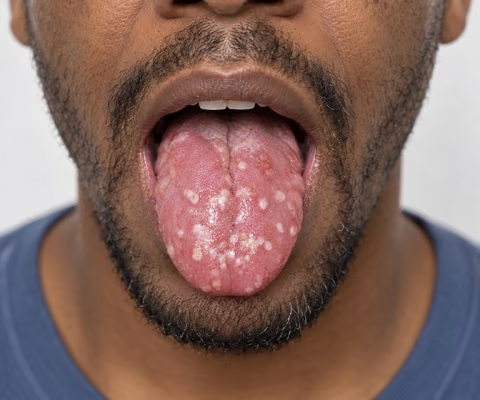
- On posttransplant Day 35, Mike presented to his outpatient clinic with oral lesions and blisters on his right fingers that prompted suspicion of a mucocutaneous HSV infection
- After 7 days of receiving valacyclovir 1 g taken orally twice daily, Mike's mucocutaneous HSV lesions are not improving
-As Mike is seropositive for HSV-1, his infectious disease prophylaxis includes valacyclovir 500 mg taken orally twice daily21
-A breakthrough mucocutaneous HSV-1 recurrence was confirmed by PCR, and his valacyclovir dose was increased to a treatment strength of 1 g taken orally twice daily3,22
Current clinical status
Surface area involvement
- Tongue: ≈30% to 40%
- Hard palate: ≈20% to 30%
- Right hand: 2 of 5 digits
Patient presentation
- Pain across all affected sites as well as when talking
- Difficulty using his right hand due to herpetic whitlow
Additional considerations
- Potential additive nephrotoxic risk with posttransplant prophylaxis (tacrolimus and sulfamethoxazole-trimethoprim)23,24
Current medications include:
- Tacrolimus19,23
- Mycophenolate mofetil19
- Valacyclovir22
- Sulfamethoxazole-trimethoprim20
- Posaconazole20
After an inadequate response to appropriate HSV therapy, what would be your next step for this immunocompromised patient with a refractory HSV infection?

This case is fictional. Description and images not based on an actual patient.
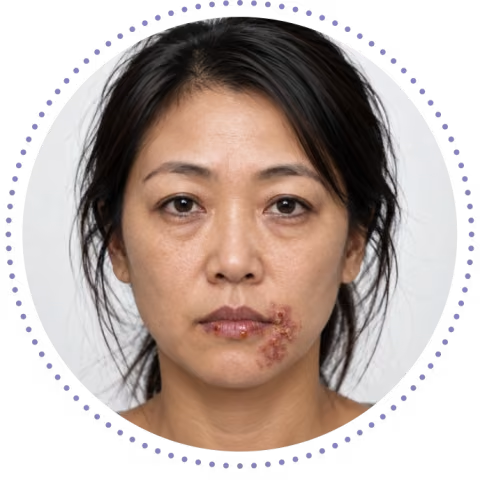
Elliot
Patient summary
- Recipient of R-CHOP chemotherapy for DLBCL who, because he is seropositive for HSV-2, is started on HSV prophylaxis with acyclovir 400 mg taken orally twice daily25,26
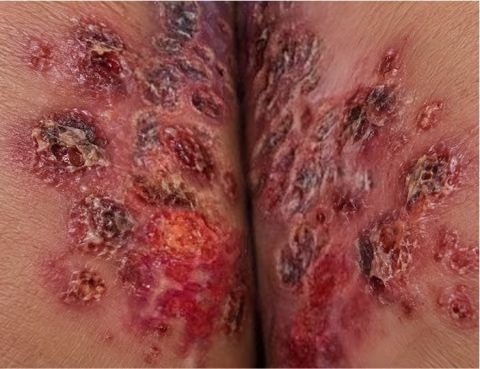
- On Cycle 1, Day +10, Elliot presented to his outpatient clinic with severe anogenital lesions that prompted suspicion of a mucocutaneous HSV infection
- After 5 days of receiving IV acyclovir, Elliot's mucocutaneous HSV lesions are not improving
-Two months prior to starting R-CHOP, Elliot developed mucocutaneous lesions due to a recurrent HSV-2 infection that were successfully treated with appropriate antiviral therapy3
-A breakthrough mucocutaneous HSV-2 recurrence was confirmed by PCR and, given the severity of Elliot’s HSV lesions in the setting of recent chemotherapy initiation, he was hospitalized for closer monitoring and initiated on intravenous (IV) acyclovir 5 mg/kg every 8 hours3,10
Current clinical status
Surface area involvement
- Extensive lesions in the perianal and genital regions
Patient presentation
- Pain when sitting and defecating
- Requires assistance walking to and from the bathroom
- Trouble sleeping due to bed pressure on lesions
Additional considerations
- Care team is monitoring infection to determine whether Cycle 2 of R-CHOP should be delayed10
Current medications include:
- R-CHOP25
- Acyclovir10
- Levofloxacin27
- Sulfamethoxazole-trimethoprim27
If mucocutaneous HSV lesions are not healing with appropriate antiviral therapy, how would you adapt your treatment approach?
This case is fictional. Description and images not based on an actual patient.
Annie
Patient summary
- Recipient of a bilateral lung transplant for cystic fibrosis who was started on standard prophylaxis for transplant rejection and infectious diseases,28-32 including valacyclovir 500 mg taken orally twice daily because she is seropositive for HSV-117,33
- On posttransplant Day 25, Annie presented to her outpatient clinic with painful orolabial vesicles that prompted suspicion of a mucocutaneous HSV infection
- After 6 days of receiving valacyclovir 1 g taken orally twice daily, Annie's mucocutaneous HSV lesions are not improving
-A breakthrough mucocutaneous HSV-1 recurrence was confirmed by PCR, and her valacyclovir dose was increased to a treatment strength of 1 g taken orally twice daily3,17
Current clinical status
Surface area involvement
- Lips: ≈4 areas of lesions
- Tongue and buccal mucosa: ≈10%
- Early lesions visible in throat
Patient presentation
- Mild pain when eating and swallowing
- Intense pruritus reported for lip lesions
Additional considerations
- Potential additive nephrotoxic risk associated with posttransplant prophylaxis (sulfamethoxazole-trimethoprim and tacrolimus)23,24
Current medications include:
- Tacrolimus28,29
- Mycophenolate mofetil28,29
- Prednisone28,29
- Valacyclovir17
- Sulfamethoxazole-trimethoprim31
- Inhaled amphotericin B32
- Azithromycin30
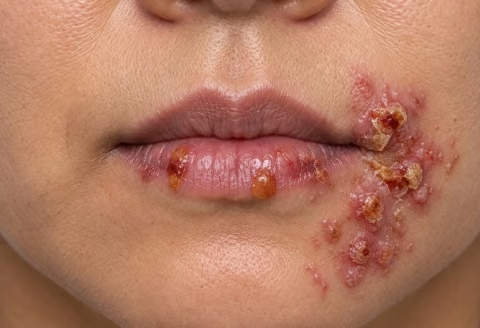
If appropriate first-line anti-HSV therapy has been shown to be ineffective and refractory mucocutaneous HSV infection is suspected, how would you respond?

This case is fictional. Description and images not based on an actual patient.
Erica
Patient summary
- Diagnosed with HIV with a CD4 count of 234 cells/mm3 and was started on ART with bictegravir/emtricitabine/tenofovir alafenamide34
- Two months after her HIV diagnosis and initiation of ART, Erica presented to her outpatient clinic with ulcerative lesions on her lips and nose that prompted suspicion of a mucocutaneous HSV infection
- After 7 days of receiving valacyclovir 1 g taken orally twice daily, Erica's mucocutaneous HSV lesions are not improving
-A recurrent mucocutaneous HSV infection was confirmed by PCR, and Erica was started on valacyclovir 1 g taken orally twice daily3,14
Current clinical status
Surface area involvement
- Ulcerative lesions are present on the upper and lower lips and nose
- Central crusting with areas of necrosis visible within lesions
Patient presentation
- Intense pain and itch around lesions
- Nasal lesions become aggravated by any movement, such as sneezing
Additional considerations
- Coadministration of bictegravir/emtricitabine/tenofovir alafenamide with drugs that reduce renal function may increase the risk of adverse reactions35
Current medications include:
- Bictegravir/emtricitabine/tenofovir alafenamide34
- Valacyclovir14
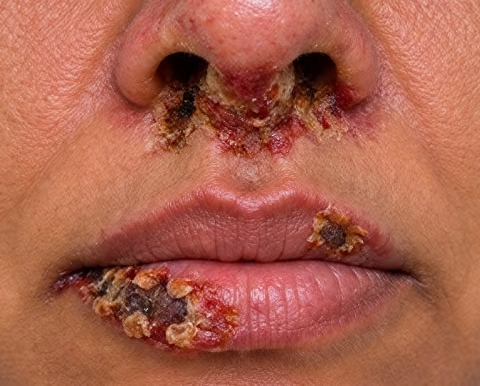
When mucocutaneous HSV lesions fail to improve despite appropriate antiviral therapy, when should treatment be reassessed if refractory HSV infection is suspected? What would be your next step?
See how HOVILPRI works

ACV-R, acyclovir-resistant; ART, antiretroviral therapy; DLBCL, diffuse large B-cell lymphoma; HCT, hematopoietic cell transplant; HSV, herpes simplex virus; IV, intravenous; MOA, mechanism of action; R-CHOP, rituximab, cyclophosphamide, doxorubicin, vincristine, prednisone; R±R, refractory with or without resistance; SOT, solid organ transplant; TK, thymidine kinase.
References: 1. Bussini L et al. Clin Microbiol Infect. 2025;31(7):1234-1236. doi:10.1016/j.cmi.2025.04.011 2. Schalkwijk HH et al. Biochem Pharmacol. 2022;206:115322. doi:10.1016/j.bcp.2022.115322 3. Chemaly RF et al. Clin Infect Dis. 2025;81(3):593-601. doi:10.1093/cid/ciae638 4. Piperi E et al. Oral Dis. 2024;30(3):877-894. doi:10.1111/odi.14635 5. Shafat T et al. Clin Microbiol Infect. 2025;31(5):761-772. doi:10.1016/j.cmi.2025.01.033 6. Dahne T et al. Clin Microbiol Infect. 2025;31(9):1484-1490. doi:10.1016/j.cmi.2025.04.046 7. Papanicolaou GA et al. Open Forum Infect Dis. 2026;13(7):ofag377. doi:10.1093/ofid/ofag377 8. Birkmann A, Saunders R. Antiviral Res. 2025;237:106152. doi:10.1016/j.antiviral.2025.106152 9. Sallee L, Boutolleau D. Rev Med Virol. 2024;34(5):e2574. doi:10.1002/rmv.2574 10. Alsuliman T et al. Lancet Haematol. 2024;11(10):e792-e802. doi:10.1016/s2352-3026(24)00210-2 11. Hill JA et al. JAMA Netw Open. 2025;8(8):e2528383. doi:10.1001/jamanetworkopen.2025.28383 12. Shehadeh R et al. J Oral Pathol Med. 2026;55(2):244-248. doi:10.1111/jop.70078 13. Park JJ et al. JHOP. 2021;11(4):210-215. 14. National Institutes of Health. Updated May 27, 2026. Accessed September 3, 2026. https://clinicalinfo.hiv.gov/en/guidelines/hiv-clinical-guidelines-adult-and-adolescent-opportunistic-infections/whats-new 15. Berger JI et al. Cureus. 2026;18(6):e110131. doi:10.7759/cureus.110131 16. Hammond SP et al. Open Forum Infect Dis. 2024;11(3):ofae046. doi:10.1093/ofid/ofae046 17. Lee DH, Zuckerman RA. Clin Transplant. 2019;33(9):1-10. doi:10.1111/ctr.13526 18. Eckardt K-U, Kasiske BL. Am J Transplant. 2009;9(suppl 3):S1-S155. doi:10.1111/j.1600-6143.2009.02834 19. Boelens JJ et al. In: Sureda A et al; eds. The EBMT Handbook: Hematopoietic Cell Transplantation and Cellular Therapies. Springer; 2024;219-227. Accessed September 3, 2026. https://www.ncbi.nlm.nih.gov/books/NBK608285/ 20. Maertens JA. In: Sureda A et al; eds. The EBMT Handbook: Hematopoietic Cell Transplantation and Cellular Therapies. 8th ed. Springer; 2024:321-329. Accessed September 3, 2026. https://www.ncbi.nlm.nih.gov/books/NBK608256 21. Tomblyn M et al. Biol Blood Marrow Transplant. 2009;15(10):1143-1238. doi:10.1016/j.bbmt.2009.06.019 22. Wormser VR et al. Transpl Infect Dis. 2023;25(suppl 1):e14201. doi:10.1111/tid.14201 23. Prograf. Prescribing information. Astellas Pharma US, Inc.; December 2018. 24. Bactrim. Prescribing information. Hoffmann-La Roche Inc.; June 2013. 25. American Cancer Society. Accessed September 3, 2026. https://www.cancer.org/content/dam/CRC/PDF/Public/8720.00.pdf 26. Henze L et al. Ann Hematol. 2022;101(3):491-511. doi:10.1007/s00277-021-04746-y 27. Kossow KW et al. J Cell Immunol. 2023;5(4):103-115. doi:10.33696/immunology.5.175 28. Saldanha IJ et al. Cochrane Database Syst Rev. 2018;6(6):CD009421. doi:10.1002/14651858.CD009421.pub4 29. Christie JD et al. J Heart Lung Transplant. 2011;30(10):1104-1122. doi:10.1016/j.healun.2011.08.004 30. Huang H et al. J Thorac Dis. 2025;17(7):4395-4408. doi:10.21037/jtd-2025-365 31. Okamoto K, Santos CAQ. Ann Transl Med. 2020;8(6):413. doi:10.21037/atm.2020.01.120 32. Patterson TF et al. Clin Infect Dis. 2016;63(4):e1-e60. doi:10.1093/cid/ciw326 33. Valtrex. Prescribing information. GlaxoSmithKline; November 2025. 34. National Institutes of Health. Updated May 27, 2026. Accessed September 29, 2026. https://clinicalinfo.hiv.gov/en/guidelines/hiv-clinical-guidelines-adult-and-adolescent-arv/whats-new 35. Biktarvy. Prescribing information. Gilead Sciences, Inc.; 2025.